3-Ton Triple Bag Air Jack: Fast Lift, Adjustable Handle
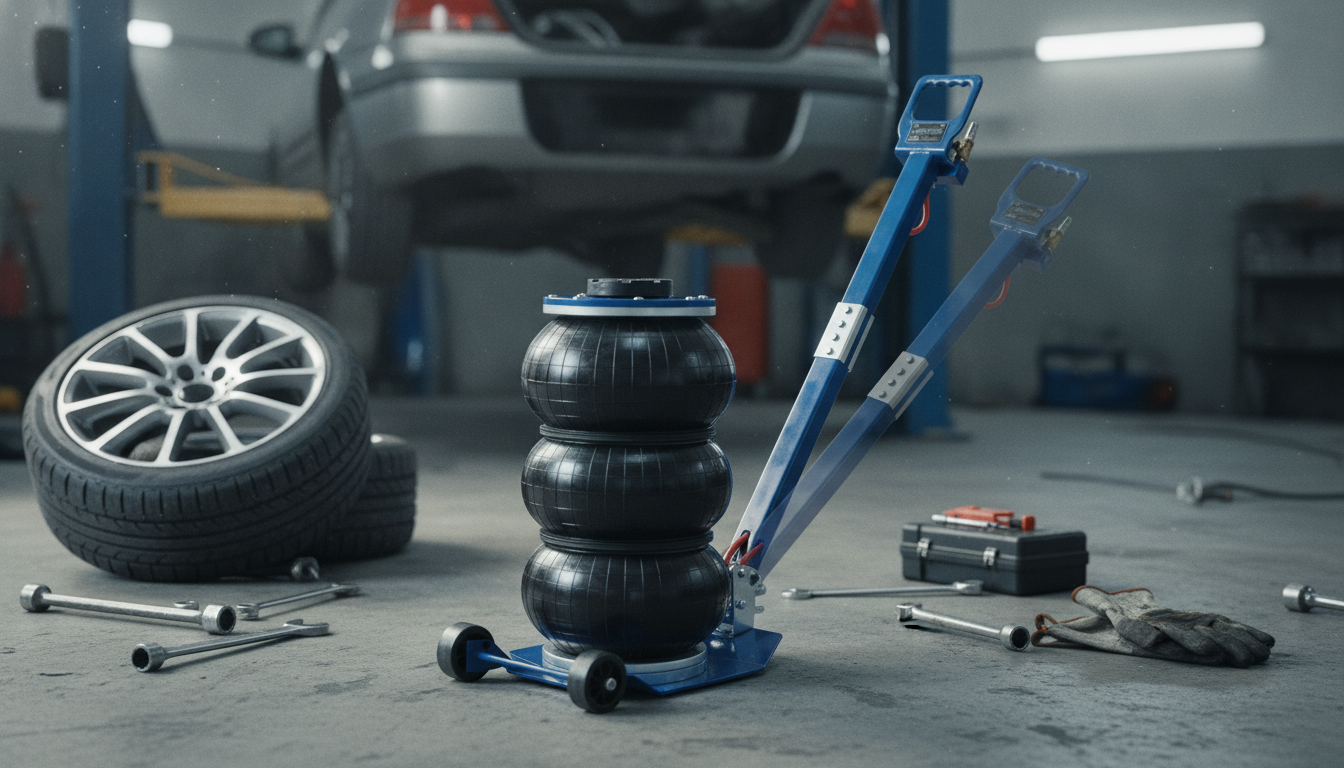
3-Ton Triple Bag Air Jack with Fast Lift & Adjustable Handle
A triple bag air jack is built for quick lifts on uneven ground where a traditional floor jack can struggle. With a 3-ton capacity, fast-lift air power, and an adjustable handle for better positioning, this style of jack suits roadside tire changes, garage work, and light off-road recovery—when used with proper lifting points and safety supports.
What a Triple Bag Air Jack Does Well
A triple bag air jack uses compressed air to do the heavy lifting, which can make set-up and lifting feel far less strenuous than a manual scissor jack or a small bottle jack. Because the lifting “bags” expand upward, you can often get a stable rise even when the ground isn’t perfect—as long as you take time to level the base and choose the right lift point.
- Uses compressed air to raise a vehicle quickly with minimal pumping effort
- Triple-bag design spreads load and improves stability on softer surfaces compared with narrow jacks
- Low-profile starting position can help reach under vehicles with limited clearance
- Good option for quick wheel swaps, brake checks, and emergency lifts when paired with jack stands
Key Features: Fast Lift and Adjustable Handle
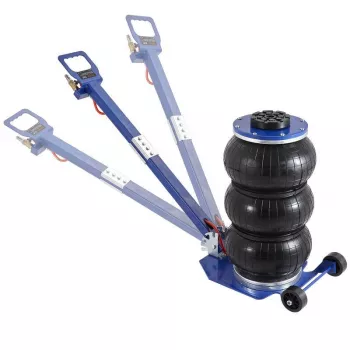
Two features separate a convenient air jack from a stressful one: how quickly it reaches working height and how confidently you can position it under the vehicle. Fast lift is about reducing exposure time (wind, rain, traffic, heat) and shortening the “in-between” stage where the vehicle is partially raised. An adjustable handle helps you guide the jack into position without putting your hands near pinch points.
- Fast lift shortens the time from placement to working height—useful in bad weather or on the roadside
- Adjustable handle improves leverage and keeps hands farther from pinch points during positioning
- Handle adjustability can reduce awkward angles when aligning with factory jack points
- Look for controlled lowering so the vehicle settles smoothly rather than dropping
Capacity, Lift Range, and Real-World Fit
A 3-ton (6,000 lb) rating can cover a wide range of passenger vehicles and some light trucks, but the rating only helps when the jack is used correctly: on a stable base, under a safe lifting point, and within the vehicle’s lifting guidance. If you’re lifting one end (one axle) at a time, you’re not lifting the vehicle’s full weight—but you still need a large safety margin for shifting loads, uneven ground, and added cargo.
On gravel, grass, or broken asphalt, the wide footprint of a triple bag design can feel more forgiving than narrow jacks. Even so, leveling and chocking matter. A simple plywood board or purpose-made support plate can dramatically improve stability on soft ground by preventing the base from sinking.
Quick facts and what to verify before lifting
| Item to check | Why it matters | Practical tip |
|---|---|---|
| Vehicle weight and axle load | Prevents overload and instability | Use the door-jamb label and owner’s manual; lift one axle at a time when appropriate |
| Lifting point location | Avoids damage to pinch welds, batteries, and underbody panels | Use factory jack points; consider a rubber pad adapter if needed |
| Ground condition | Soft or sloped ground increases risk of tipping | Place a thick plywood board under the jack on soft surfaces |
| Air source compatibility | Ensures the jack can inflate and lift as designed | Confirm compressor output and fittings; keep hoses clear of hot exhaust |
| Support equipment | A jack is for lifting, not holding | Set jack stands under approved points before working underneath |
How to Use It Safely (Step-by-Step Workflow)
Whether you’re changing a tire or checking suspension components, the goal is the same: lift smoothly, stabilize immediately, and never rely on the jack alone while you’re in a vulnerable position. For general tire-change safety reminders, see guidance from NHTSA. For broader shop safety practices, review OSHA resources.
Portable lifting devices are also covered by industry standards and references such as ASME (ANSI/ASME PALD overview/reference), which can be helpful when comparing lifting tool categories and safety expectations.
Where It Helps Most: Roadside, Garage, and Light Off-Road
Care, Storage, and Troubleshooting
Product Options In Stock
- 3-Ton Triple Bag Air Jack with Fast Lift & Adjustable Handle — designed for rapid raising with improved control and positioning; best practice is to pair it with properly rated jack stands for any under-vehicle work.
- 5-Step Folding Dog Stairs for Cars — helpful for reducing jump-in height for pets riding along, especially in taller vehicles.
- Futuristic Cyberpunk Marble Run 3D Puzzle Model — a build-and-display option for hobby time between projects.
FAQ
Can a 3-ton air jack lift an SUV or light truck?
Often yes, but it depends on the vehicle’s weight and how much of that weight is being lifted at once. Confirm the SUV or truck’s weight, lift one axle at a time when appropriate, and only lift from factory-approved points on a stable base.
Does an air jack replace jack stands?
No. An air jack is designed to lift, while jack stands are designed to support the load securely; use both for any work where you’ll be near or under the vehicle, along with wheel chocks.
What air compressor is needed for a fast-lift air jack?
Check the jack’s required pressure range and the compressor’s airflow output, then confirm the fittings match. Use hoses rated for the pressure, and route them away from hot exhaust and moving suspension components during lifting.










Leave a comment